
Community
Overdoses in Bellevue
11 min read
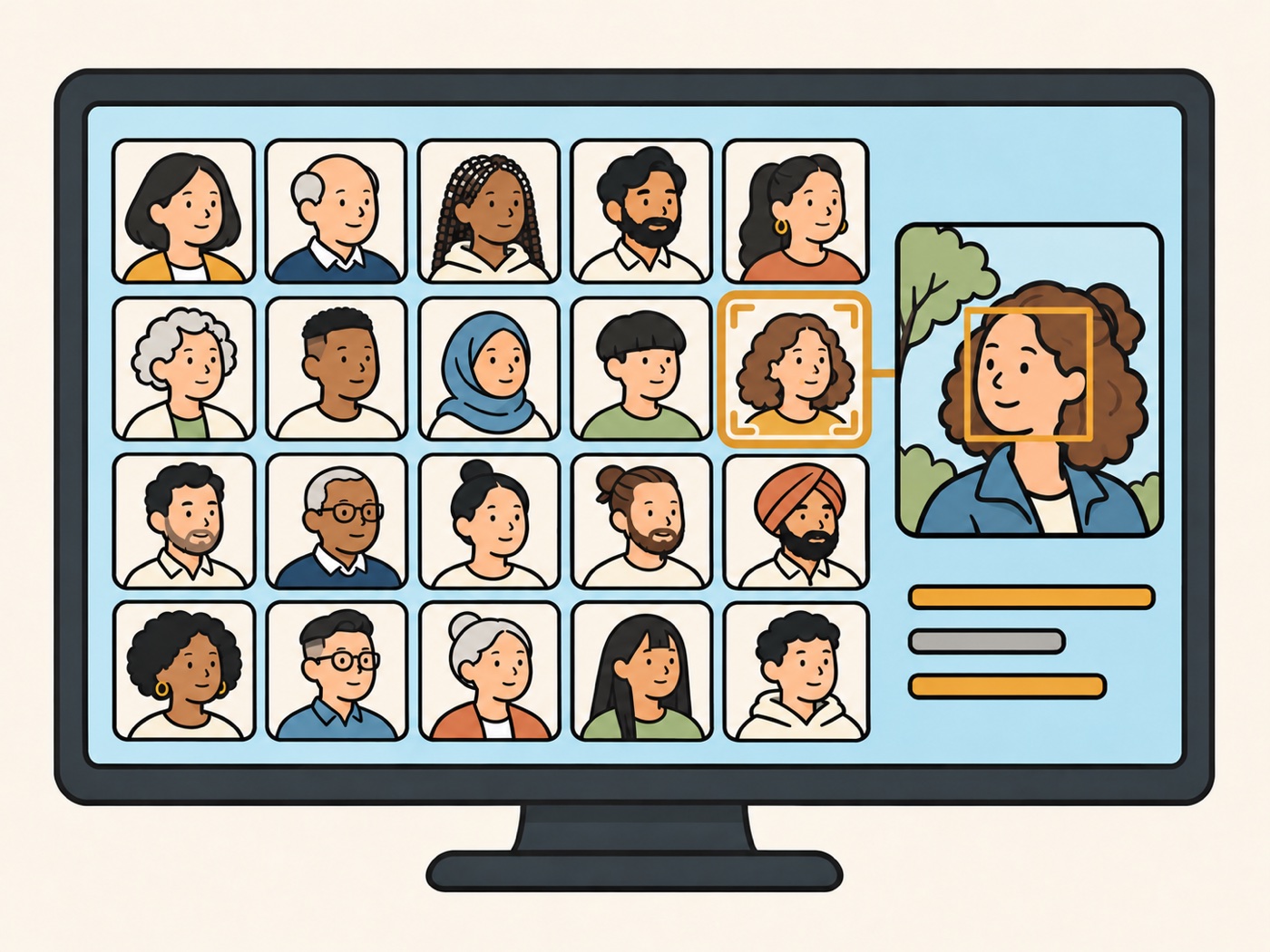
Since July 2021, a Washington police department that wants to use facial recognition has to tell its city council first, write a public report on the system, and hold three community meetings before switching it on. We searched the websites of Bellevue, Redmond, Issaquah, Mercer Island, Medina and Clyde Hill on 3 November 2026 and found no notice and no report from any of them. Kirkland has banned the technology outright since 2022, and King County bars its own departments, the Sheriff among them. The law sets no penalty for a department that skips the steps.
The rules are in chapter 43.386 of state law, passed in 2020 and in force from 1 July 2021 (RCW 43.386.020). A city agency that intends to develop, buy or use a facial recognition service goes through these steps first, and updates its report every two years.
A warrant is needed only for the most intrusive uses: ongoing surveillance, identification in real time, and persistent tracking (RCW 43.386.080). A detective comparing a still photo against a database after a crime is covered by the notice and report rules, not the warrant rule. A match can never be the only basis for probable cause, and a defendant must be told before trial that the technology was used.
Two gaps matter for anyone checking. A contract signed before July 2021 is exempt until it is renewed or extended. And the chapter contains no penalty, no enforcement office and no right for a resident to sue. The ACLU of Washington's Jennifer Lee told Cascade PBS in 2023 there is "no penalty for flouting the transparency rules."
Redmond's manual section is standard text from Lexipol, the company that writes policy manuals for many departments, so it shows that Redmond planned for the law, not that it uses facial recognition. Its report, if one exists, should be on redmond.gov or the council's site, and we did not find it there.
Kirkland's ban stops the city and its employees from obtaining or using facial recognition or contracting anyone to use it on the city's behalf, with exceptions for redaction software and consumer devices (O-4796). King County's ban covers its own offices and departments, and unlike the state law it lets any person sue to stop a violation (Ordinance 19296). The Sheriff also polices Sammamish, Newcastle, Woodinville, Kenmore and other cities under contract. The ordinance does not say whether its ban follows deputies into that contract work.
In 2023, Cascade PBS reported that emails published by the ACLU show police in Auburn, Bellevue, Kirkland and Redmond "experimenting with facial recognition" since at least 2016, and that it was unclear whether they had continued.
We read the Bellevue document. It is a February 2016 email thread. A regional coordinator at South Sound 911 told several departments that their "facial recognition advanced workbench", on a shared system the emails call RBPC, was paid for through 2016 by a Seattle police federal grant, and that from 2017 each department would pay $3,700 a year per workbench for the software (named as Ikena and Forensica GPS). Asked whether it had the system, a Bellevue police employee replied "We do," but said there had been few matches and the department was in "complete belt tightening mode" (ACLU of Washington, published April 2020). The thread does not say whether Bellevue paid for 2017 or still uses the system.
Bellevue police confirm they have a facial recognition workstation on a shared regional system.
The Legislature passes the facial recognition law, chapter 43.386.
The ACLU of Washington publishes the 2016 Bellevue emails.
King County bars its own departments, the Sheriff among them.
The state law takes effect.
Kirkland bans the technology.
Cascade PBS reports the rules carry no penalty.
We search six cities' websites and find no notice or report; we file a request with Bellevue.
Bellevue's first reply is due.
There is no statewide list of local filings. The state's facial recognition page is the filing point for state agencies only, and it lists one notice: the state technology office's own 2023 plan to explore face and voice login for residents' state accounts (WaTech).
A public records request filed on 3 November 2026 asks the Bellevue Police Department for any notice or report filed under the law; its current policy on the technology; any contract, invoice or cancellation since 2016 for the 2016 workstation or with six facial recognition vendors; emails about that system or with Clearview AI; the number and dates of any accounts; and any log of searches it asked another agency to run. It does not ask for anyone's photo or name. A reply of "no records" is an answer, and this page will report it.
Clearview AI sells police a search tool built from photos collected from the public web. Its privacy page offers access, deletion or opt-out requests to residents of 13 states. Washington is not one of them, and the page offers no form for residents of other states (Clearview, read 3 November 2026).
A search is not a registry. We used a web search engine and each city's own pages. A notice on a council consent agenda or committee packet that search does not index would be missed. Redmond is the likeliest place for one.
Use through another agency may not count. A city that sends photos to the State Patrol, the fusion center or the FBI for a search may not be "using" a service under the law. That is a legal question we have not answered.
Older contracts are exempt until renewal. A department with a contract signed before July 2021 could be using facial recognition lawfully with no report.
The 2016 emails stop in 2016. They show Bellevue had the workstation then, not whether it kept it past July 2021, when the law's steps began. Until Bellevue replies, this page does not say Bellevue skipped them.
Policy manuals were not all read. We read Redmond's 2023 manual section. We did not find Bellevue's, Issaquah's or Mercer Island's manuals online.
Revised Code of Washington chapter 43.386; King County Ordinance 19296 (2021) and the Sheriff's contract city list; Kirkland Ordinance O-4796 (2022) and Kirkland Municipal Code chapter 11.94; Redmond Police Department policy manual, section 600.9 (Lexipol, 2023); WaTech facial recognition page and its August 2023 notice of intent; Cascade PBS reporting by Brandon Block (26 July 2023); Bellevue Police Department emails of 10 and 11 February 2016, published by the ACLU of Washington (April 2020); Clearview AI privacy and requests page. All read 3 November 2026.
Updates and corrections. None so far.
One email when a new story is published, with any corrections. Nothing else.
Community
11 min read
Community
3 min read

Community
5 min read